Qualification questions
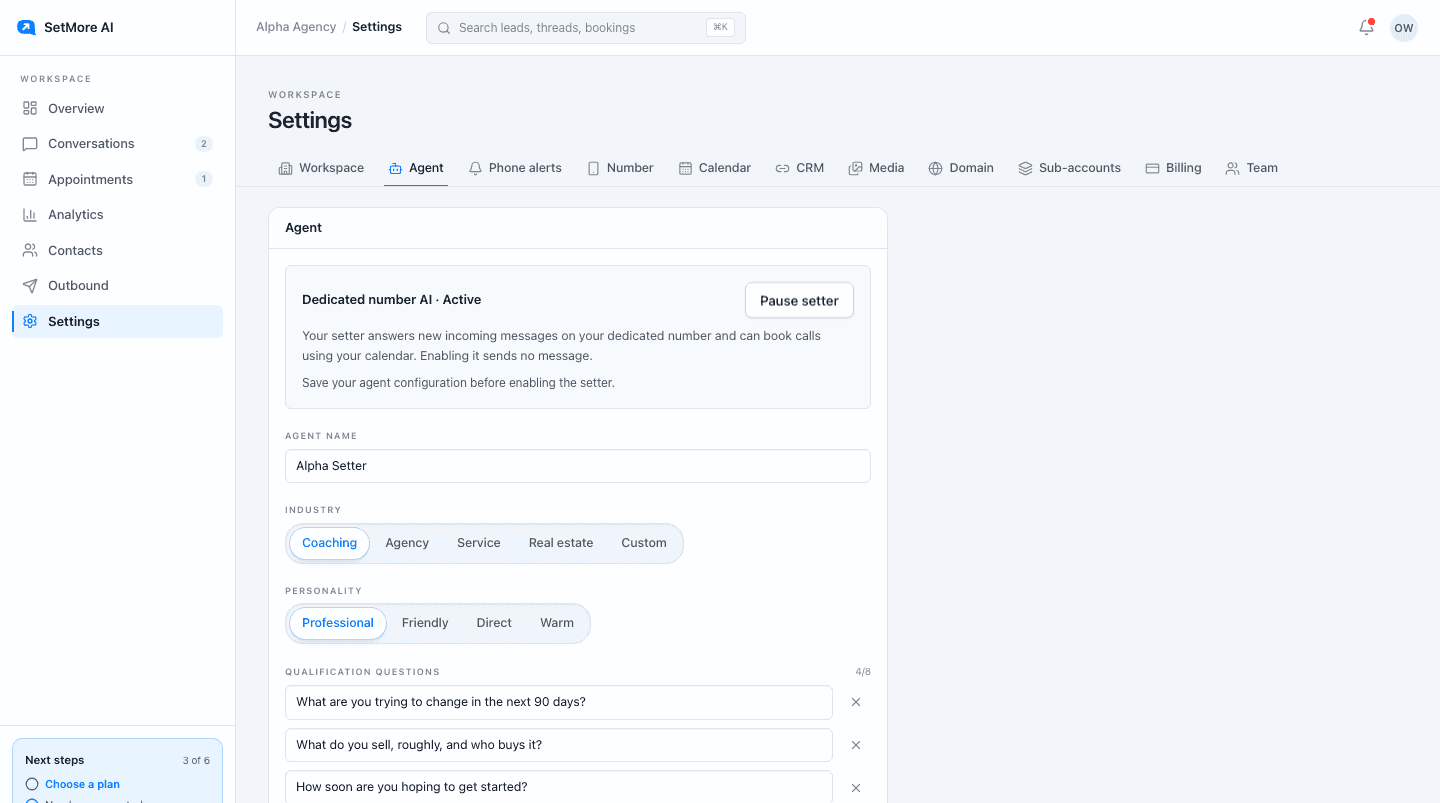
The setter asks one question, then goes straight to offering times. So the first question is the one that matters. Make it easy, specific to your offer, and something a stranger will answer in a few words: what they are trying to change, what market they are in, what they sell.
Write three to five questions in the order you would ask them yourself. Easy first. Anything about money last, and never income, savings, debt or credit score. Those questions end conversations; the call is where money gets discussed.
- Good: What are you trying to change in the next 90 days?
- Good: What do you sell, roughly, and who buys it?
- Weak: What is your budget for this? (Nobody answers this from a stranger by text.)
- Weak: Two questions in one message. The setter will not stack them, and neither should your list.
The objection playbook
Write each entry as the answer you would text, not a paragraph you would say on a call. One or two sentences. The setter answers from it in one clause and offers times again.
For price, do not write a number unless you want it quoted. Write what it depends on. The setter will name those variables, decline to throw out a random figure, and explain that the call is where the team maps it to their situation.
- Price: It depends on where you are starting and how fast you want to move. The call is where we map that to you.
- Timing: The call takes fifteen minutes and there is nothing to prepare.
- Trust: Fair to be careful. The call is free and the point of it is to decide whether this is a fit before anyone pays anything.
- Spouse or partner: The setter offers to add them to the call. You do not need an entry for this.
Personality and media
Friendly is the right default for most businesses. Direct suits trades and high-volume services. Professional suits finance, legal and medical. Warm suits coaching and wellness. Do not pick a tone you would not use yourself on the phone.
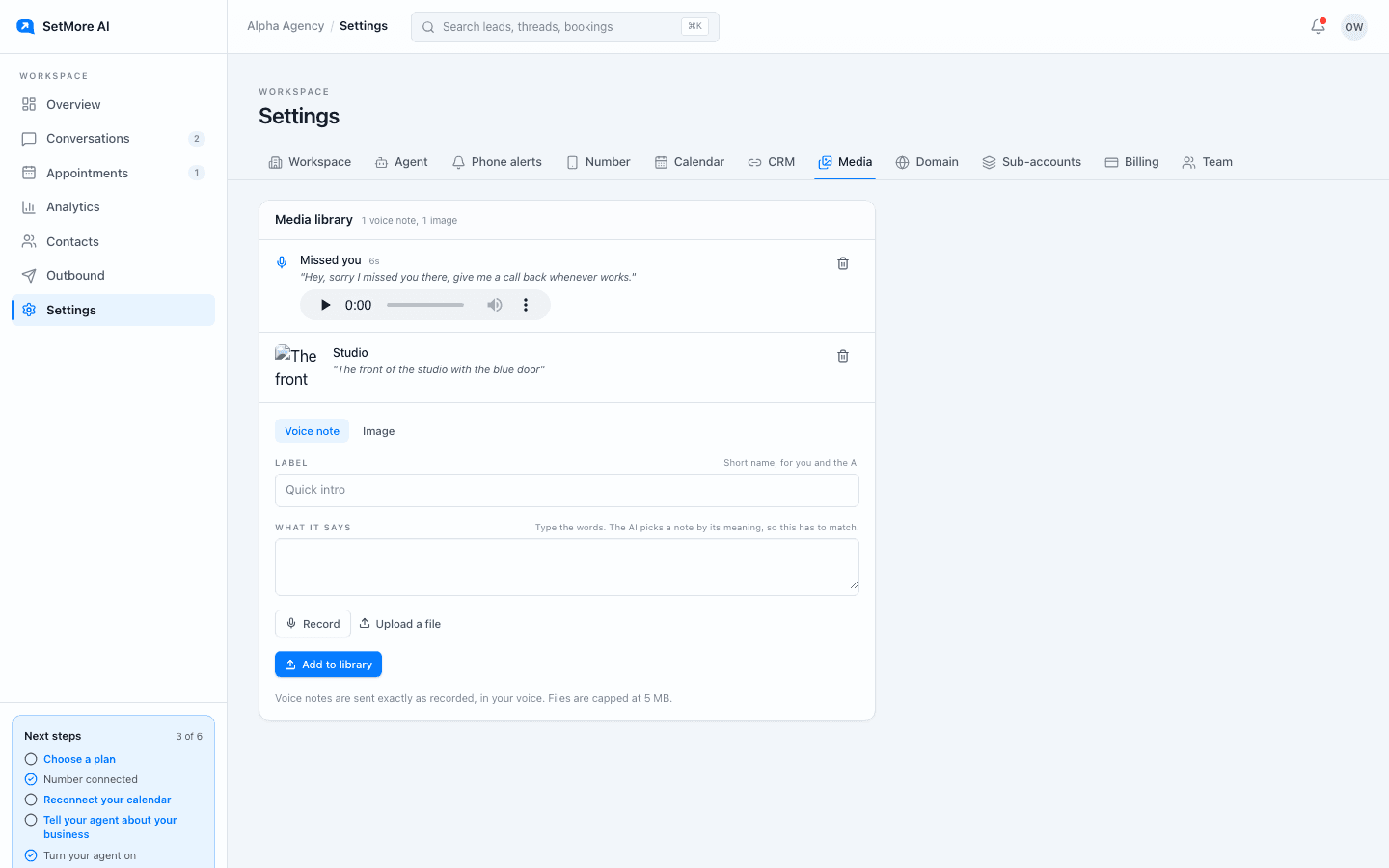
The media library lets you add short voice clips and images the setter can send when they genuinely help: a before-and-after, a menu, a map, a fifteen-second note in your own voice. It uses them rarely and only when they fit. One good clip beats ten.
Test it before leads do
Text your number from your own phone and play a lead for ten minutes. Try the things real leads do: ask what it costs, say you are busy, say you were burned before, ask if it is a bot, give it a wrong time zone, go quiet. Then read the thread as the lead would.
Fix anything that felt off in the Agent tab, and test once more. After that, read your first ten real threads. That is where the last tuning happens, and it is usually one playbook entry.
What good looks like
A thread that books in six to ten messages. The setter asked one thing, answered one objection in a sentence, offered two times, confirmed the one the lead picked, and collected an email. The lead never got a link, never got two questions at once, and never got a paragraph.
Mistakes we see most
Five things account for most of the threads that do not book.
- A first question about budget. Reply rate falls off a cliff.
- A playbook that argues. Leads do not want to be convinced by text; they want a reason to take the call.
- Prices in the playbook that are out of date. The setter will quote them.
- Availability that does not match reality, so the two times it offers are ones you cannot make.
- Nobody reading the first ten threads.
Questions people ask
- How many qualification questions should I write?
- Three to five. The setter asks one per text and moves to booking as soon as it has what it needs, so the first one carries most of the weight.
- Should I put my price in the playbook?
- Only if you want it quoted by text. Most businesses do better writing what the price depends on and letting the call carry the number.